If you are planning to renovate your home, it makes sense to consider solar panels before the building work begins. Early planning gives you more opportunity to coordinate the design, roof work, electrical installation and battery storage.
That does not always mean the panels should be fitted first. If your roof needs repairs or replacement, those jobs will usually need to be completed before the panels go on. The best sequence depends on the work involved, the condition of your roof and how you want your home to use electricity.
For homeowners in Dorset, speaking to a solar installer while you are still planning the renovation can help you make these decisions before they become more complicated or costly.
A renovation can affect the parts of your home that matter to a solar system. An extension may alter the roof area or create new shade. A loft conversion may affect where cables can run. Replacing the roof may change the structure, materials or layout available for panels.
Discussing solar early gives your builder, electrician and solar installer time to coordinate their work. They can consider where the panels will sit, how cables will enter the property, where the inverter and battery could go, and whether your plans may affect the system’s performance.
This can also help you make practical decisions while parts of the property are already accessible. For example, your electrician may be able to plan cable routes before walls and ceilings are finished. Your solar installer can also advise whether a battery should be included in the initial design or considered at a later date.
Dorset Green Energy designs residential solar systems around each home and its energy use. You can find out more about its residential solar installations in Dorset.
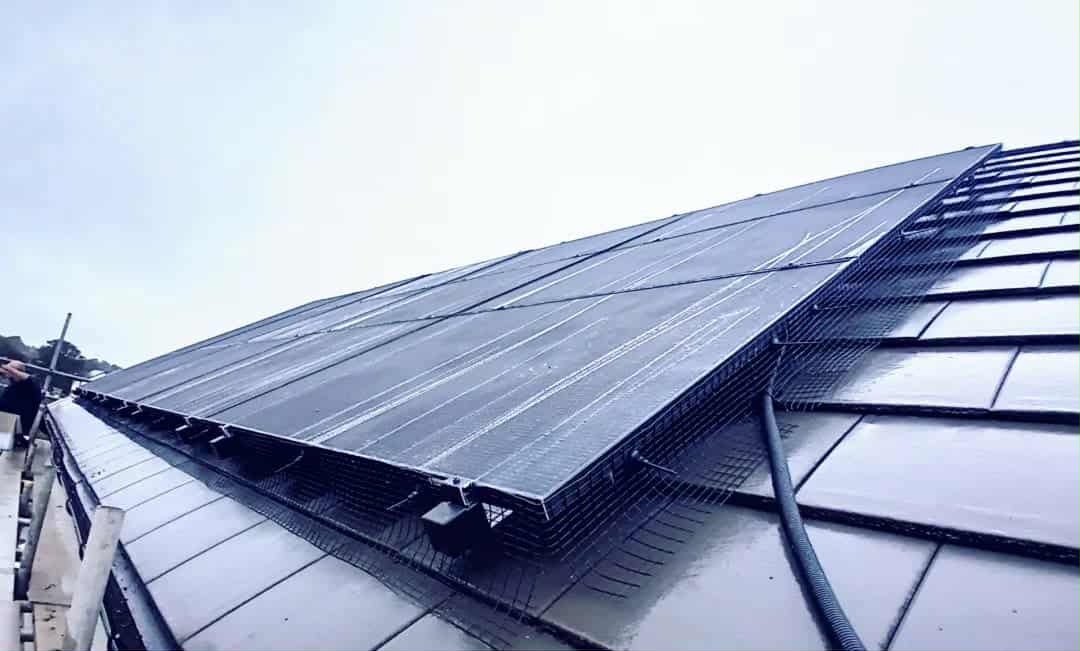
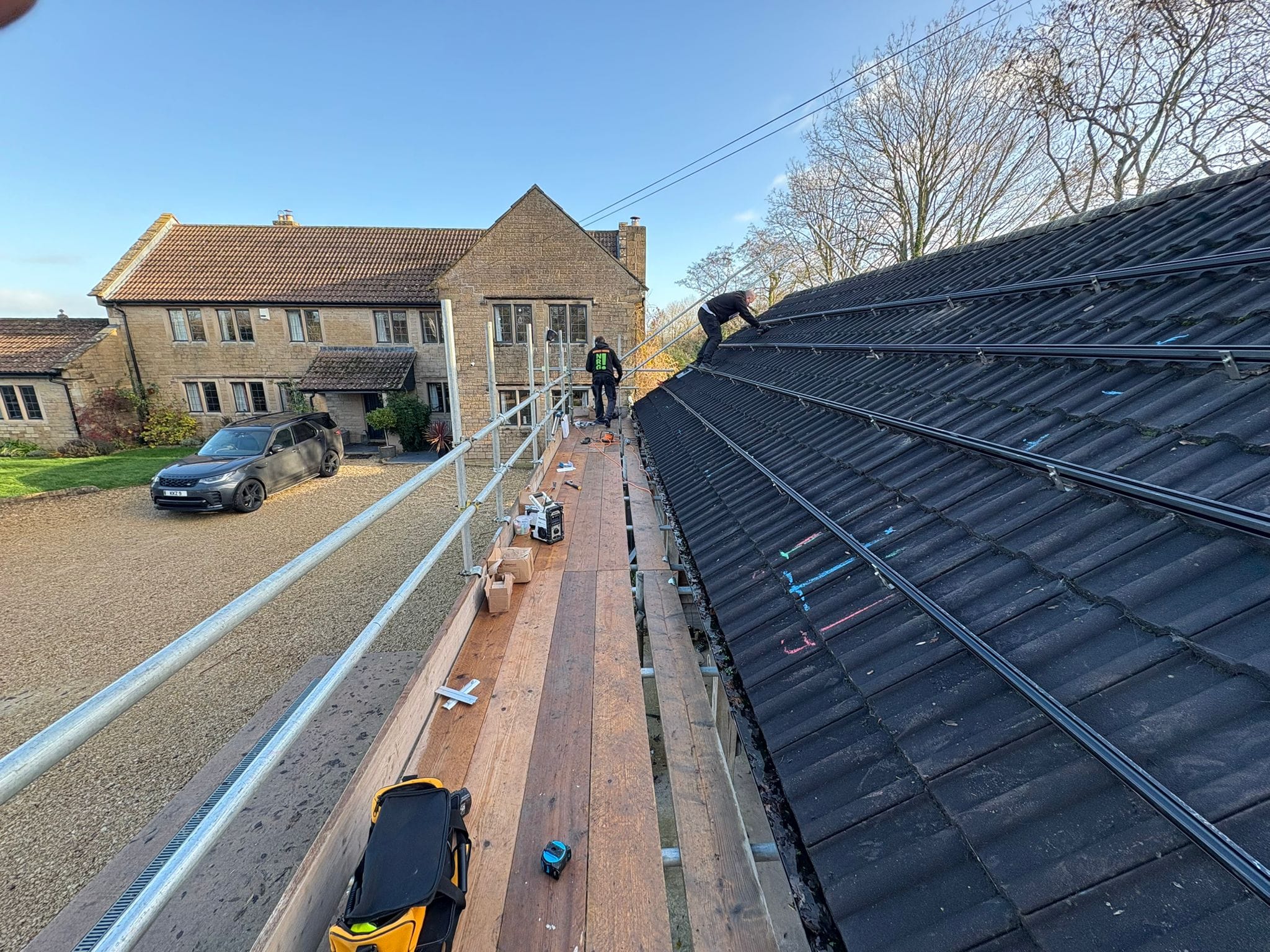
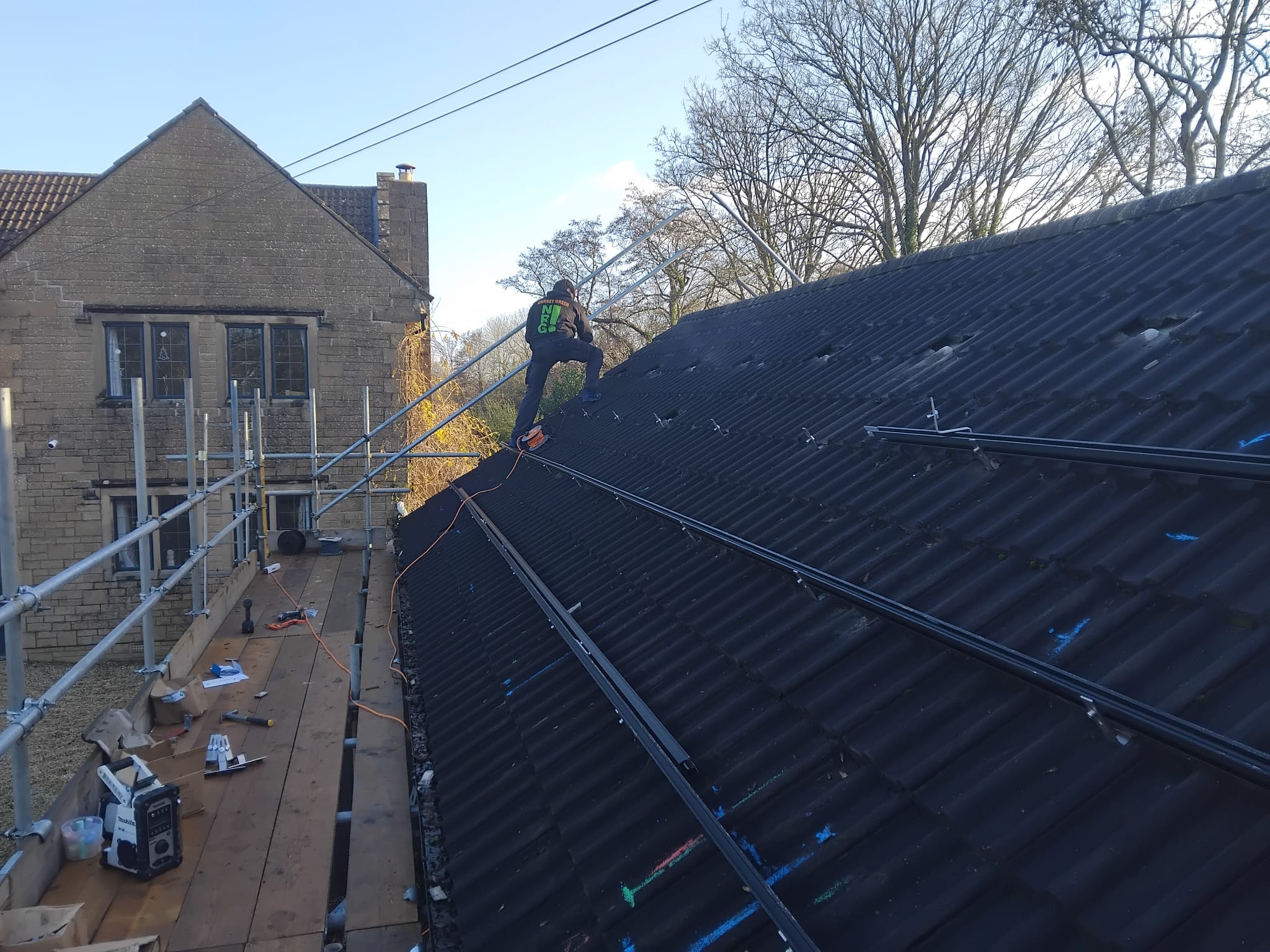
Usually, it is sensible to complete necessary roof repairs or replacement before installing solar panels. Solar panels are designed to remain in place for many years. If you fit them to a roof that soon needs work, you may have to pay to remove and reinstall them.
Ask a roofer to assess the roof as part of your renovation planning. If the roof is in poor condition, agree how the roofing work and solar installation will be sequenced. The roofer and solar installer should also discuss the roof covering, fixings and any structural concerns.
If you are keeping the existing roof, an assessment can help establish whether it is suitable for the proposed system. Where there is uncertainty about the roof structure, seek advice from an appropriately qualified professional before proceeding.
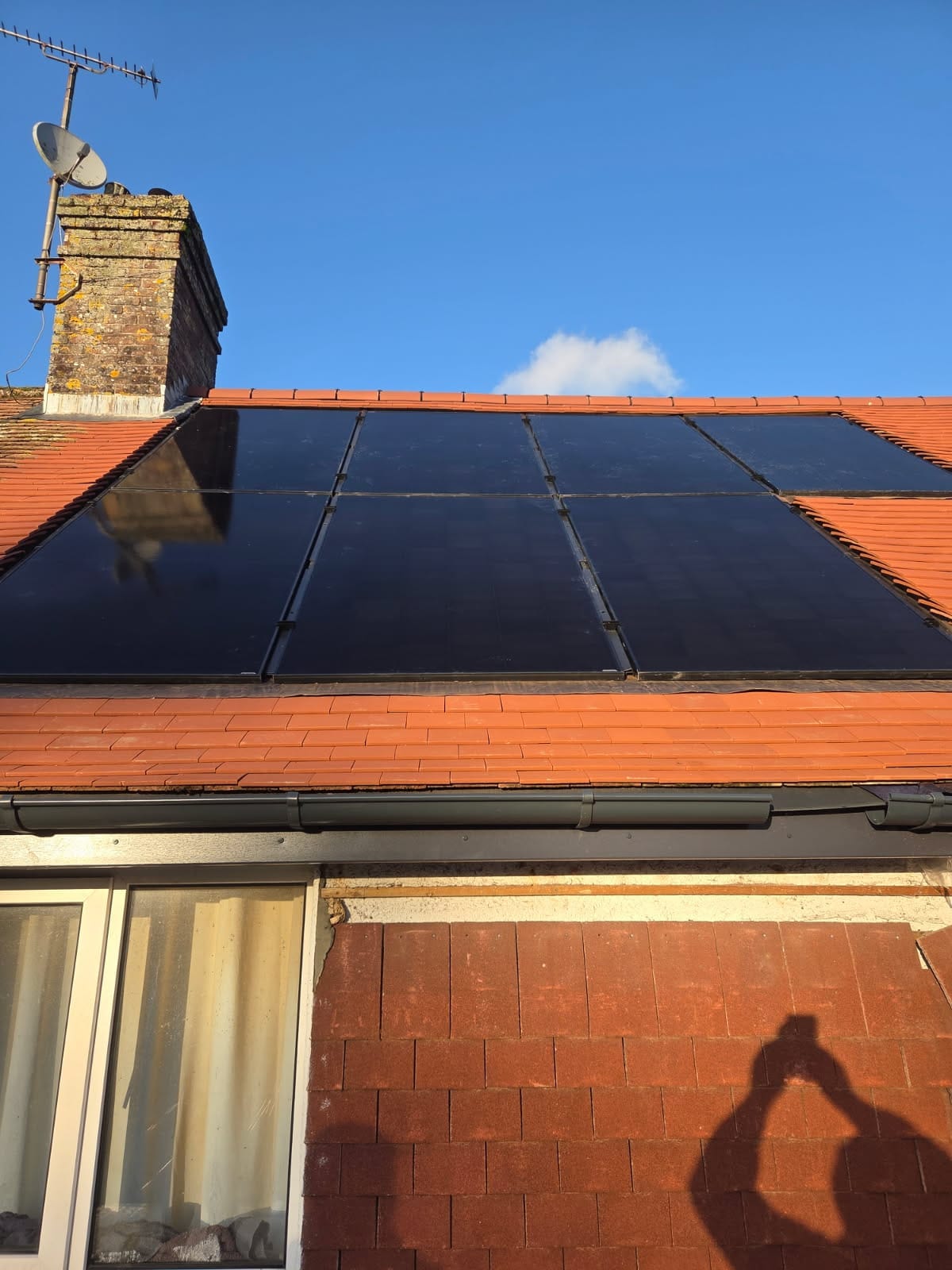
It can. Renovation plans may give you a chance to make the roof and electrical design work better for solar. For instance, you may be able to review the position of roof windows, vents or chimneys before the roof work is finished. These features can affect the space available for panels and may cast shade.
An extension may provide additional roof space, although its direction and exposure to shade matter. A solar installer can assess the available roof areas and estimate how they may perform. A south facing roof is not the only option. The orientation, pitch, shade and the household’s pattern of electricity use all influence the design.
It is also useful to discuss your expected electricity needs. If the renovation will add rooms, improve insulation or introduce new appliances, your future energy use may differ from today’s. A system assessment should take your plans into account rather than relying only on current bills.
A solar battery stores electricity that your panels generate but your home does not use straight away. You can then use that stored electricity later, often in the evening. Whether a battery is suitable depends on your usage, system design and budget.
Renovation is a useful time to think about battery storage because you can plan the installation space and cable routes before the work is complete. You do not have to decide on a battery without proper advice. However, telling your installer that you may want one can help them consider the options from the outset.
Dorset Green Energy offers battery storage for homes and says its systems are tailored to the property and energy requirements. The right design will depend on your circumstances, so ask for a clear assessment rather than assuming that a larger battery will always be better.
Many home solar installations in England can be carried out without a planning application, provided they meet the relevant permitted development conditions. There are exceptions, including some installations on listed buildings and properties in designated areas. The rules can also depend on the type and position of the equipment. Check the requirements for your property with the local planning authority before work begins.
Electrical work in a home must also meet the relevant safety requirements. Approved Document P sets out guidance on electrical safety in dwellings, including design, installation, inspection and testing. Your installer should explain what certification or notification applies to the work.
You can arrange a solar assessment before, during or after a renovation. However, waiting until every detail is complete may limit your options. By then, the roof may be finished, walls may be closed and cable routes may be harder to access.
Planning early does not commit you to installing panels immediately. It gives you the chance to understand the costs, likely system design and practical requirements before you decide. If the renovation is extensive, an early discussion can also help determine whether the solar installation should happen after the main building work.
You should plan for solar panels before your renovation, but the installation itself will often need to wait until roof repairs and related building work are complete. Early coordination helps your project team account for the roof layout, electrical work, battery storage and future energy use.
If you are planning a renovation in Dorset, contact Dorset Green Energy to discuss your property and request a tailored quote. You can also arrange a consultation to understand the options before your building work begins.
Yes. Solar panels can be installed after renovation work, provided the roof and electrical arrangements are suitable. Planning ahead may make it easier to coordinate the work and prepare cable routes.
If the roof needs repair or replacement, it is generally better to complete that work first. Otherwise, the panels may need to be removed and refitted when the roof is repaired.
In many cases, a battery can be added later, but compatibility and installation requirements depend on the solar system and battery selected. Tell your installer if battery storage may be part of your future plans.